There's more to good job design than getting the level right
Most people think of job design as the thing you do to get a role classified. Fill out the form, get the designation, move on.
But a well-written job design document is one of the most useful artefacts in the life of a role, and it deserves more attention than it usually gets.
What good job design actually gives you
When you invest properly in the job design process, you're not just ticking a box. You're creating clarity in an enduring record that pays off long after the classification comes back.
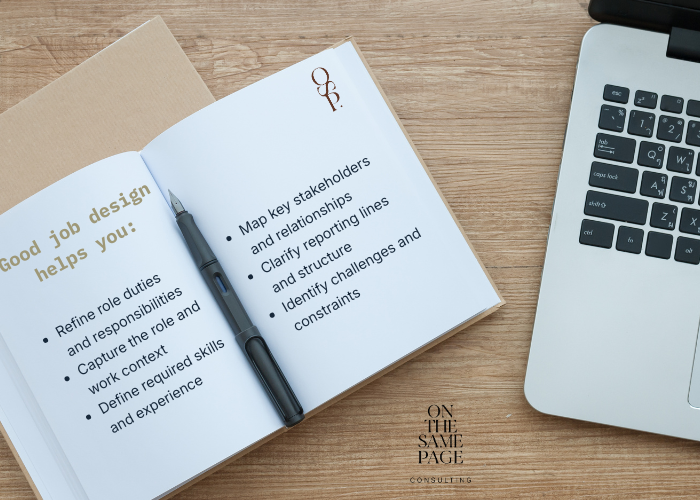
Good job design helps you:
Refine the duties and responsibilities of a role (not just tasks)
Capture the context of the work unit the role sits in
Identify the knowledge, skills and experience a suitable applicant needs
Map the people, organisations, community groups and peak bodies the role interacts with, and why
Clarify reporting lines and organisational structure
Consider what makes the role difficult: constraints on decision-making, changing context, or competing demands
And when you're designing or redesigning multiple roles at once, it's how you figure out which duties belong where.
The job design document doesn't stop being useful once the role is classified
This is the part most organisations miss. Your job design document can (and should) be used to:
Write a better job ad. A concise job description that helps the right people see themselves in the role, and gives the recruitment panel a solid foundation for fair, defensible assessment.
Onboard well. A one-page job description can only tell a new starter so much. The job design document fills in the bigger picture: context, relationships, complexity.
Support development. It's a ready-made tool for identifying growth areas for the person in the role.
Trigger a review when things change. If a restructure has shifted the role significantly, or the work has evolved beyond what was originally designed, the job design document is where you go to check whether the role still matches its classification.
We see this one a lot. In job design engagements with our clients, the original role and the current role are often vastly different. That gap should be a prompt to revisit the role and its responsibilities, not something that quietly compounds.
Good job design puts everyone on the same page
Being clear about what a role is (and isn't) helps everyone: the applicant, the manager, the assessor, the recruitment panel, and every future incumbent and manager down the line.
And here's a practical tip: file the job design document somewhere it can actually be found. When you move on, when the next restructure happens, when someone needs to recruit for the role again, that document needs to be accessible.
The bigger picture: where job design fits
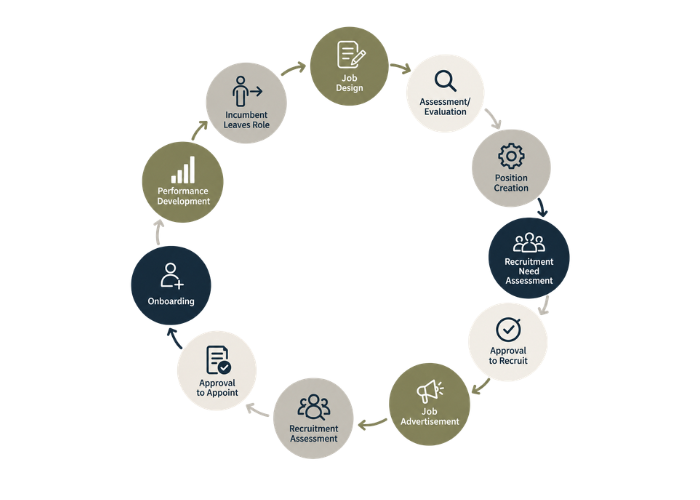
Job design is the starting point of a cycle that flows through everything from assessment and position creation to recruitment, onboarding and performance development. When the design is strong, every step that follows is easier.
Want to dig deeper?
In our recruitment capability training for occasional recruiters, we walk through how job design connects with recruitment, and spend time examining real job design documents and job descriptions to sharpen your thinking before you start recruiting.
Check out our next training session later this month, we'd love to have you there.
https://www.eventbrite.com.au/e/2000408999166?aff=oddtdtcreator